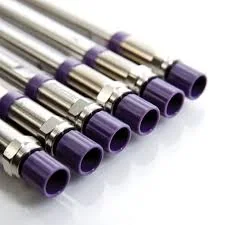
HiQ Sil Technical Resources
Use the jump links to reach each topic. These recommendations are general; always follow the current manufacturer instructions for the exact column and method.
- How to Select a HiQ Sil Column
- Reversed-Phase Column Selection
- Normal-Phase and Polar Phase Selection
- Particle-Size Selection
- Pore-Size Selection
- Column Installation
- Column Conditioning
- Mobile-Phase Preparation
- Column Flushing
- Column Storage
- Guard Columns
- High Backpressure Troubleshooting
- Peak Tailing Troubleshooting
- Peak Fronting
- Split Peaks
- Retention-Time Changes
- Loss of Efficiency
- Ghost Peaks
- Column Lifetime
- Column Regeneration
- Method Transfer
- Safety and Good Laboratory Practice
How to Select a HiQ Sil Column
Start with analyte polarity and ionization, then consider the required retention mechanism, selectivity, particle size, pore size, internal diameter, length and instrument pressure capability. Compare alternative phases when critical compounds co-elute.
Reversed-Phase Column Selection
C18 generally gives the strongest hydrophobic retention. C8 and C4 reduce retention and can shorten run time for highly hydrophobic compounds. Phenyl adds π–π interactions and can change aromatic selectivity.
Normal-Phase and Polar Phase Selection
NH2, CN and bare silica provide polar surface chemistry. Normal-phase methods require careful control of solvent water content because small moisture changes can alter retention.
Particle-Size Selection
Three-micrometre particles can provide higher efficiency but typically create more backpressure. Five-micrometre particles are widely used for routine analytical work. Ten-micrometre particles provide lower pressure and are suited to conventional methods where maximum efficiency is not required.
Pore-Size Selection
The catalogue lists 100 Å and 120 Å materials. Pore size influences accessible surface area and analyte diffusion. Choose according to analyte size and the validated application.
Column Installation
Confirm flow direction, use compatible low-dead-volume fittings, avoid overtightening and increase flow gradually. A poor connection can cause leaks, peak splitting or excess dead volume.
Column Conditioning
Equilibrate with a fully compatible mobile phase until pressure, baseline and retention are stable. Gradient methods may require several column volumes for complete re-equilibration.
Mobile-Phase Preparation
Use HPLC-grade solvents, accurate volumetric preparation, filtration where required and adequate degassing. Prevent buffer precipitation when changing to high-organic solvents.
Column Flushing
Flush according to the stationary phase and contaminants present. First remove salts with a compatible aqueous-organic mixture, then use stronger organic solvent if needed. Never switch abruptly between immiscible solvents.
Column Storage
Remove buffers and salts, store in a compatible solvent and cap both ends. Record the storage solvent so the next user can recondition safely.
Guard Columns
Guard cartridges intercept particulates and strongly retained contaminants before they reach the analytical bed. Replace them when pressure rises or chromatographic performance changes. A compatible adaptor is required.
High Backpressure Troubleshooting
Check the system without the column, inspect tubing and filters, reverse-check the inlet frit only when manufacturer guidance permits, and consider particulate blockage, buffer precipitation, viscous mobile phase or a contaminated guard cartridge.
Peak Tailing Troubleshooting
Possible causes include secondary interactions, inappropriate pH, sample overload, contamination, dead volume and poor fittings. Adjust one factor at a time and compare a system-suitability standard.
Peak Fronting
Common causes include sample overload, strong injection solvent, column-bed damage or poor focusing. Reduce load and match the sample solvent more closely to the initial mobile phase.
Split Peaks
Investigate sample-solvent mismatch, poorly seated fittings, partial frit blockage, injection problems and possible void formation.
Retention-Time Changes
Check mobile-phase composition, temperature, flow-rate accuracy, equilibration, buffer pH, solvent evaporation and column history.
Loss of Efficiency
Potential causes include contamination, voids, excessive injection volume, overload, worn system components and insufficient equilibration.
Ghost Peaks
Check carryover, solvent impurities, contaminated glassware, autosampler wash settings, system contamination and sample-preparation reagents.
Column Lifetime
Lifetime depends on sample cleanliness, mobile phases, pH exposure, pressure, temperature, system cleanliness and maintenance. A fixed injection count should not be promised.
Column Regeneration
Recovery depends on the contaminant and whether the bed is physically intact. Progressive flushing may restore performance, but damaged beds or permanently adsorbed material may not be recoverable.
Method Transfer
Account for internal diameter, length, particle size, flow rate, injection volume, gradient volume and instrument dwell volume. Revalidate system suitability after transfer.
Safety and Good Laboratory Practice
Handle solvents in accordance with safety data sheets, use suitable ventilation and PPE, control waste streams and follow manufacturer documentation and laboratory procedures.